The Notebook on My Desk
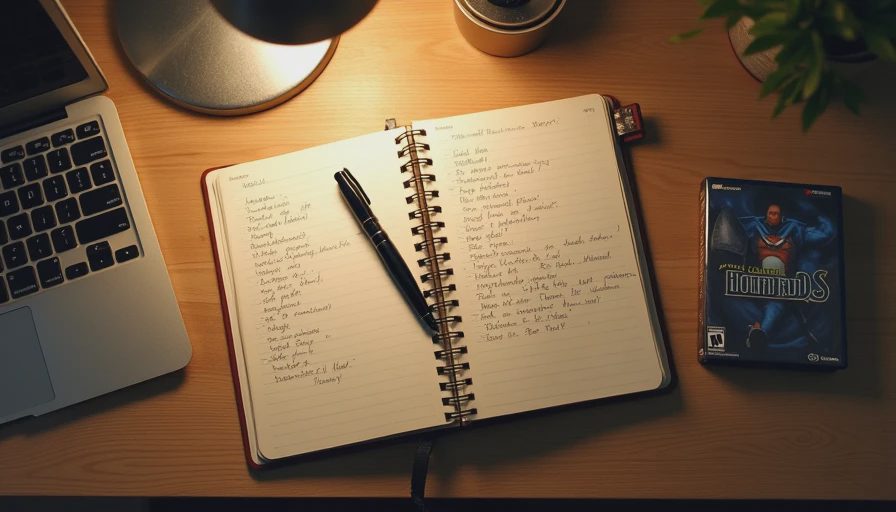
There’s a notebook on my desk.
It’s nothing fancy. A simple spiral-bound notebook I picked up at a local stationery shop. The cover is worn. The pages are dog-eared. There are coffee stains on the edges.
I’ve been using it for years.
It’s where I track games worth watching. Games I’ve discovered. Games I want to play. Games I want to recommend.
In the age of digital tools—wishlists, spreadsheets, note-taking apps—I still use a handwritten notebook.
Here’s why.
Why Digital Tools Don’t Work for Me
I’ve tried digital tools. They’re great for organizing. They’re great for searching. They’re great for sharing.
But they don’t work for me when it comes to tracking games.
Digital tools are too easy. You add a game to your wishlist with a single click. You don’t think about it. You don’t engage with it. You just… save it.
The lack of friction makes me less intentional. When I add a game to a digital list, I’m not making a decision. I’m just clicking a button.
Digital tools also make me forget. When a game is on a list of hundreds of games, it gets lost. I scroll past it. I don’t think about it. It’s just another entry.
The notebook is different.
Why the Notebook Works
The notebook works because it’s intentional.
When I write a game in the notebook, I’m making a decision. I’m choosing to remember it. I’m choosing to come back to it.
The act of writing is slow. It takes time. It forces me to think about what I’m writing. I’m not just clicking a button—I’m making a judgment.
The notebook also forces me to be selective. There’s limited space. I can’t write down every game I see. I have to choose.
The result is a list of games that actually matter. Games I’ve thought about. Games I’ve considered. Games I’ve committed to memory.
The System
My system is simple.
I write down the game’s name. I write a brief description—a few words about what the game is and why it caught my attention. Sometimes I write the platform. Sometimes I write the genre. Sometimes I add a note about where I found it.
I organize the notebook by date. When I discover a game, I add it to the current page. I don’t sort by genre or platform or anything else. The notebook is chronological.
This helps me remember the context. When I look back at the notebook, I can see the order in which I discovered games. I can see what I was thinking about at the time.
I also cross things out when I’ve played them—or when I’ve decided I’m not interested. The notebook is a living document. It changes over time.

What’s in the Notebook
Right now, there are about thirty games in the notebook.
Some are recent discoveries. Some are games I’ve been meaning to play for months. Some are games I’ve already recommended to friends.
There’s a puzzle game I found on itch.io. A narrative game I saw at a festival. A roguelike that someone recommended on Reddit. A cozy game that looked relaxing.
Each entry has a note. “Short, about 4 hours.” “Beautiful pixel art.” “Clever time mechanic.” “Good reviews, but only 200 downloads.”
The notebook is a collection of signals. Reminders of games that caught my attention. Reasons to come back to them.
The Social Side
The notebook isn’t just for me.
Sometimes I show it to friends. I flip through the pages and say “I think you’d like this one.” I read them the notes I wrote. I tell them why I thought of them.
The notebook is a conversation starter. It’s a way of sharing my thinking. It’s a way of being intentional about recommendations.
The Joy of the Physical
There’s something satisfying about the physical notebook.
It doesn’t run out of battery. It doesn’t have notifications. It doesn’t need to be updated. It just… sits there.
I like the weight of it. The texture of the paper. The feeling of crossing something out. The satisfaction of adding a new entry.
It’s a small pleasure. But it’s real.
The Bottom Line
I still use a handwritten notebook to track games worth watching.
Digital tools are useful. But they don’t work for me. They’re too easy. They’re too passive. They don’t force me to think.
The notebook works because it’s intentional. It’s slow. It’s selective. It’s personal.
If you’re looking for a way to track games more thoughtfully, I recommend trying a notebook. It’s small. It’s simple. And it might change how you discover games.
This is the kind of game that needs someone to mention it.
Not a masterpiece. Still worth your time.




No notes on this sheet yet.