The best multiplayer horror games are not always the ones filling every storefront banner. Sometimes they are smaller, rougher around the edges, or released during a crowded month when everyone was watching something else. For adult players with limited evenings, that matters. You do not need another giant checklist of supposedly essential releases. You need a game that gives four friends a good reason to gather, makes the room feel slightly unsafe, and does not waste the first hour explaining itself.
I have spent enough nights listening to friends argue over whether a noise came from the game or the hallway to know that co-op horror works best when systems create the tension. A monster that follows a predictable script is less interesting than a door nobody wants to open because the team has already spent its last useful item. The recommendations below focus on that kind of pressure. Some are well known now, while others still feel like they were waiting in the wrong aisle.
Why multiplayer horror games work better with the right group
Fear changes when responsibility is shared. In a single-player game, every mistake belongs to you. In a cooperative game, the mistake might belong to the friend who insisted on checking the basement, the player who used the flashlight battery too early, or the person who confidently read the map backward. That shared blame creates stories, and stories are usually what keep a co-op horror game alive after the first scare.
The strongest multiplayer horror games also understand that communication can be more frightening than silence. GTFO is a good example. It is not a casual haunted-house ride. Its missions demand planning, quiet movement, careful timing, and a willingness to accept that the team may fail several times before learning the route. The game can be punishing, but its tension comes from decisions rather than constant jump scares.
Phasmophobia takes a more accessible approach. Its equipment list, investigation structure, and voice-based interactions make it easy to explain to a group that does not play horror games regularly. The fun is in making a weak conclusion sound certain while standing in a dark room with a teammate who has already started backing toward the exit.
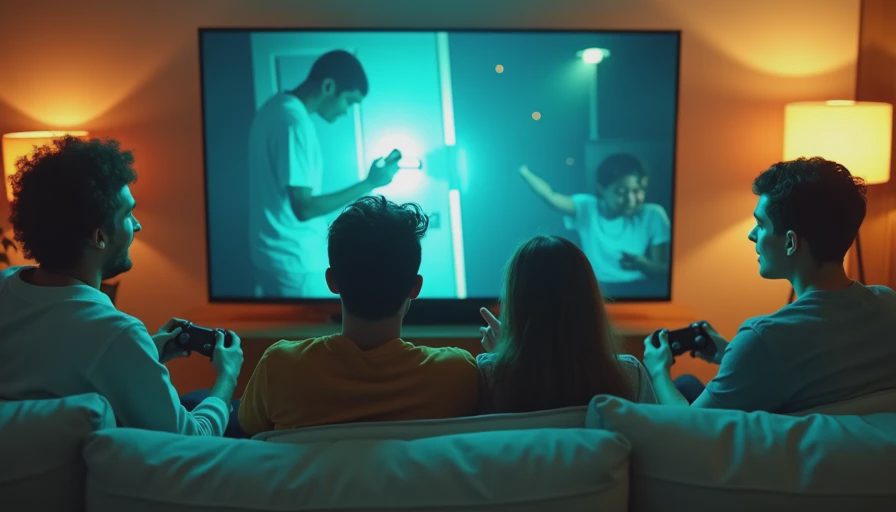
The multiplayer horror games that got buried
Lethal Company received plenty of attention, but its basic appeal is still easy to underestimate. The scavenging loop is simple: enter dangerous facilities, collect valuable scrap, and return before the quota catches up with you. What makes it work is the distance between the plan and the actual night. A careful expedition can become a frantic rescue attempt because one player wandered too far, one monster blocked the obvious route, or someone decided that one more piece of scrap was worth the risk.
Barotrauma is stranger and more demanding. You operate a submarine beneath an alien ocean, and every job matters. Someone handles navigation, someone repairs damage, someone manages weapons, and someone may be making terrible decisions while pretending to understand the reactor. It is part survival game, part social experiment, and part mechanical disaster. The learning curve is real, but a patient group can get dozens of memorable sessions from it.
Content Warning is lighter in tone but surprisingly effective at creating panic. The goal is to film dangerous situations and upload the footage, which turns fear into a performance. Players are not merely trying to survive; they are also trying to produce a clip worth bringing home. That extra objective creates funny, specific pressure. A teammate may know the smart move is to leave, but the group still wants one more shot.
These multiplayer horror games are not interchangeable. GTFO is deliberate and tactical. Lethal Company is loose and unpredictable. Barotrauma rewards a group willing to learn complicated systems, while Content Warning works well when everyone wants a shorter, messier session. That difference is useful. The right choice depends less on a ranking than on what your group actually enjoys doing together.
How to choose multiplayer horror games for your schedule
Start with session length. If your group has forty-five minutes after work, a game built around long missions and repeated planning may create more friction than fear. Phasmophobia, Content Warning, or a short map in Escape the Backrooms can fit that window better. If you have a full evening and four players who enjoy retrying a difficult scenario, GTFO or Barotrauma can become the main event rather than a quick distraction.
Then consider how much talking the game requires. Some multiplayer horror games become dull if everyone separates, because the design depends on constant conversation and shared problem-solving. Others become better when players split up and report incomplete information. Before buying, watch a few minutes of ordinary gameplay rather than a highlight reel. Look for the quiet stretches, inventory management, navigation, and failed attempts. Those moments tell you whether the game has a lasting loop or only a strong trailer.
Platform and player count matter, too. Check current store listings for supported systems, cross-play, maximum party size, and whether private lobbies are available. A game can be excellent and still be a poor recommendation if your group plays on different platforms or usually has six people online. Price is another practical filter. Many promising co-op titles cost less than a movie night for four, but the real value comes from whether your friends will return next weekend.

A simple way to test one without wasting an evening
Choose one person to host and agree on a stopping point before launching. Give the game about thirty minutes for its core loop to appear, not just its tutorial. During that time, notice three things: whether failure teaches the group something, whether players have meaningful jobs to perform, and whether the sound design creates anticipation between major scares.
If everyone is laughing at the same problems, that is usually a good sign. If one player spends the whole session waiting for the others to finish a task, the design may not suit your group. You can also rotate responsibility. Let one person lead navigation, another manage equipment, and another make the risky calls. Good multiplayer horror games produce different kinds of tension depending on who is responsible when the plan falls apart.
Do not confuse difficulty with depth. A game that kills the team without offering readable causes can feel exhausting rather than scary. The best experiences give you enough information to understand the mistake afterward. You should be able to say, “We should have listened for that sound,” or “We brought the wrong tools,” instead of simply blaming an invisible rule.
The quieter recommendation
My short list would begin with Phasmophobia for accessibility, Lethal Company for unpredictable group stories, and GTFO for players who want serious coordination. Barotrauma belongs on the list for patient groups that enjoy systems, while Content Warning is a strong pick for a relaxed night when nobody wants a grim campaign. Escape the Backrooms can fill the gap when your group prefers maze navigation and immediate objectives.
None of these games needs to be declared a masterpiece to justify its place on your hard drive. Their value is more practical: they give people a reason to talk, make decisions, and remember the session afterward. That is a better standard than chasing whatever horror title has the loudest launch week.
The best multiplayer horror games are often the ones your group can describe later in one sentence: the submarine exploded because somebody lied, the quota was one item short, or the ghost answered at exactly the wrong time. Not everything loud is worth your time. Not everything quiet should be missed.

No notes on this sheet yet.