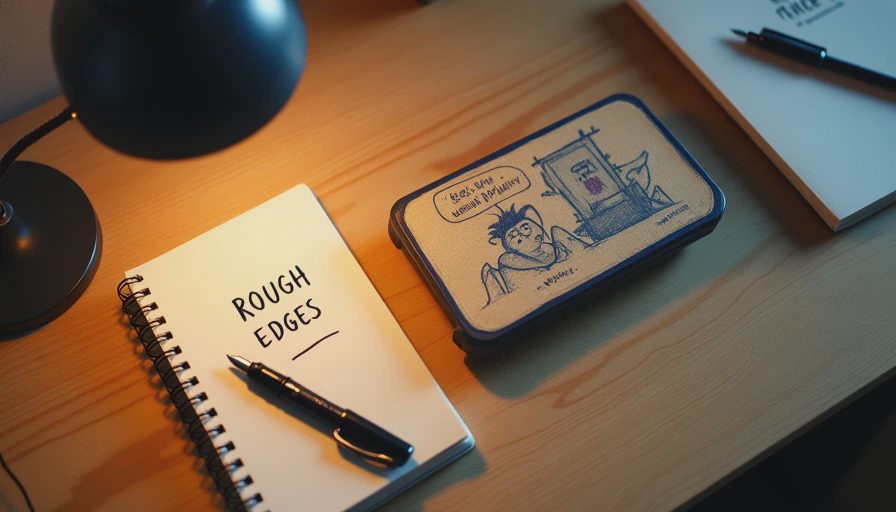
The Game That Changed My Mind
I used to think polished games were better games.
Smooth controls, clean UI, high production values. If a game was rough around the edges, it was probably low quality. It was probably amateur. It was probably not worth my time.
Then I played a game that changed my mind.
It was a small indie title. The art was rough. The controls were clunky. The UI was confusing. It was clearly made by a small team with limited resources.
But it was also brilliant. The ideas were smart. The mechanics were creative. The experience was unlike anything I'd played before.
I almost skipped it because of the rough edges. I'm glad I didn't.
What "Rough Around the Edges" Actually Means
When I say a game is rough around the edges, I mean a few things.
The visuals might be inconsistent. The controls might be a bit clunky. The UI might be confusing. The performance might be uneven. The story might have gaps. The pacing might be off.
These are the things that get polished in big-budget games. They're the things that smooth out the experience.
But a rough edge isn't always a flaw. Sometimes it's a sign of ambition. Sometimes it's a sign of limited resources. Sometimes it's a sign that the creator was trying to do something ambitious.
Why Rough Games Can Be Better
Rough games have advantages that polished games don't.
They're more experimental. Polished games have to appeal to a wide audience. They can't take risks. Rough games can. They can try things that might not work. And sometimes, they work brilliantly.
They're more personal. A rough game often feels like it was made by one person or a small team. It feels personal. It has a voice. It has personality.
They're more interesting. Polished games are often predictable. You know what you're getting. Rough games are unpredictable. You never know what you're going to get.
They're more honest. A rough game doesn't pretend to be something it's not. It wears its limitations on its sleeve.

How to Spot a Good Rough Game
Not every rough game is worth your time. Some are just bad. Here's how to tell the difference.
Look for a clear vision. Is the game trying to do something specific? Is there a clear idea behind it? A rough game with a clear vision is worth exploring.
Look for ambition. Is the game trying to do something ambitious? Is it reaching for something beyond its resources? Ambition is often a sign of quality.
Look for interesting ideas. Does the game have interesting ideas? Is there something unique about it? A rough game with interesting ideas is worth your time.
Look for craft. Even if the game is rough, is there evidence of craft? Is the design thoughtful? Is the writing good? Craft can shine through roughness.
The Games That Proved It
Let me give you some examples of rough games that are worth your time.
Cave Story. The art is simple. The controls are basic. The design is rough. But it's one of the best games ever made.
Stardew Valley. The art is simple. The controls are basic. The UI is clunky. But it's one of the most beloved games of the last decade.
Celeste. The art is simple. The controls are tight but the design is rough. But it's one of the best platformers ever made.
These games are rough. But they're also brilliant. The rough edges are part of their charm.
Why This Matters
This matters because perfection is overrated.
We've been trained to expect polish. We've been trained to expect smooth experiences. We've been trained to expect games that are carefully designed and flawlessly executed.
But some of the best experiences come from games that are rough. Games that are trying something new. Games that are pushing boundaries. Games that are made by people who care more about the idea than the polish.
If you're always looking for polished games, you'll miss some of the best games.
The Bottom Line
A little rough around the edges can still mean worth your time.
Rough edges can be a sign of ambition, experimentation, and personality. They can be a sign that the creator was trying to do something different.
Don't dismiss a game just because it's not polished. Give it a chance. You might discover something special.
Not a masterpiece. Still worth your time.
What it does well is smaller—and smarter—than the marketing suggests.



No notes on this sheet yet.